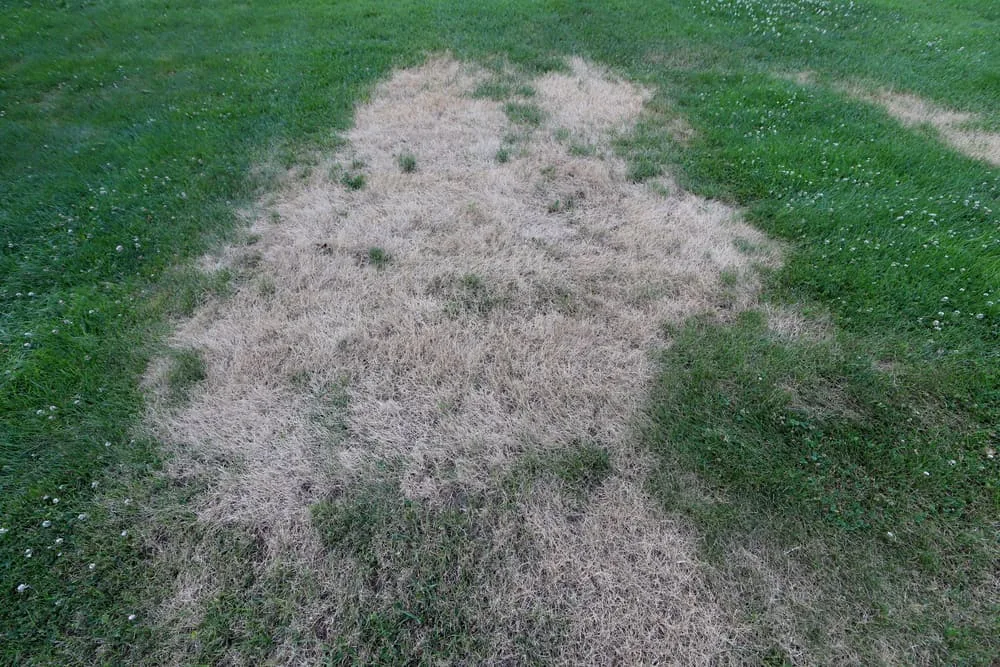

Brown patches in your lawn can appear almost overnight, leaving healthy grass thin and dry. At Canvas Lawn Care, we see this every season in Knoxville, East Tennessee, and coastal Mississippi, and the cause is rarely what homeowners expect. Fungus, poor drainage, compacted soil, pests, and over-fertilizing can all cause brown spots in lawn areas. Treating the wrong problem wastes time and can make the damage worse.
Quick answer: Brown patches in lawn areas are most often caused by brown patch fungus, large patch, overwatering, underwatering, compaction, pests, or pet urine. Identify the cause first, fix watering and drainage, and use lawn fungus treatment only when disease is confirmed.
Seeing Brown Patches This Fall?
Brown patch fungus on fescue is not active in November, so what you are seeing right now is usually one of two things:
- Knoxville and East Tennessee: Most often bermuda or zoysia going dormant for winter. Dormant grass turns an even straw color and greens up again in spring (see the table below).
- Coastal Mississippi: Likely large patch, which is active in cool, wet fall weather. Mississippi State University Extension calls it the most common lawn disease in Mississippi during spring and fall. Fall control is especially important, because affected lawns will not recover until the following spring. Learn more about coastal Mississippi grass diseases.
If your patches are circular, keep expanding, or you are not sure what you are looking at, get a diagnosis before the damage sets in for winter.
What Causes Brown Patches in Lawn Areas?
- Fungal disease: Fungi such as Rhizoctonia solani cause brown patch in hot, humid summer weather and large patch in cool, wet spring and fall weather.
- Overwatering: Constantly wet blades invite fungal infection.
- Underwatering: Dry soil starves roots, and grass loses its color.
- Poor drainage: Standing water weakens roots.
- Compacted soil: Hard soil blocks water, oxygen, and nutrients.
- Excess nitrogen: Too much fertilizer at the wrong time of year raises disease risk.
Not Every Brown Spot in Lawn Areas Is Fungus
| Cause | What It Looks Like |
|---|---|
| Brown patch fungus | Expanding circles, tan lesions with dark brown borders |
| Dog urine | Dead spot with a dark green ring |
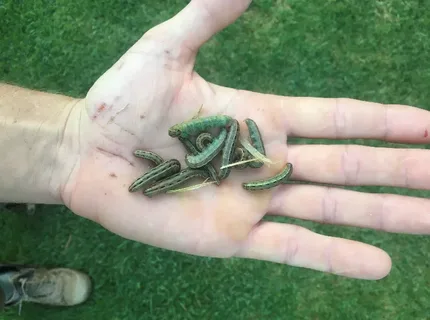
| Grubs | Spongy turf that lifts like a carpet |
| Chinch bugs | Yellow-brown patches in sunny St. Augustine areas |
| Dull mower blades | Frayed, tan grass tips |
| Drought or dormancy | Even straw color; green returns with water or cooler weather |
Suspect grubs or chinch bugs? See our turf pest control service.
How to Identify Brown Patch Fungus
- Circular or irregular patches that keep expanding.
- Tan leaf lesions with dark brown borders.
- A smoky gray ring on humid mornings.
- White, cobweb-like growth on wet blades. Other diseases, such as Pythium and dollar spot, can look similar, which is why a proper diagnosis matters.
Brown patch is most active when daytime highs reach the 80s°F, nights stay above about 65°F, and humidity is high. It mainly affects cool-season grasses like tall fescue. Warm-season grasses such as Bermuda, Zoysia, centipede, and St. Augustine get large patch, which appears in cooler, wet spring and fall weather. The University of Tennessee Extension explains this in W1359, Large Patch vs. Brown Patch in Turfgrass, and Mississippi State University Extension shares Gulf Coast recommendations in P3743, The Plant Doctor: Large (Brown) Patch of Warm-Season Turfgrasses.
How to Fix Brown Patches in Lawn Areas
- Adjust watering. Water early in the morning, deeply but less often, so blades dry during the day. See our watering guide.
- Aerate compacted soil. Core aeration lets water and oxygen reach the roots. Professional aerification helps high-traffic and clay lawns.
- Time your nitrogen. Match fertilizer to your grass type and season:
- Fescue: Avoid heavy nitrogen in late spring and summer. Fall feeding is fine.
- Warm-season grass with a history of large patch: Avoid early spring nitrogen and quick-release nitrogen in the fall.
- Repair damage. Once the cause is controlled, overseed fescue, and use sod or plugs on warm-season grasses like St. Augustine and centipede, which do not recover from seed.
Lawn Fungus Treatment: When Is Fungicide Necessary?
If an inspection confirms fungal disease, a lawn fungus treatment may be needed. Preventative applications protect healthy grass when weather starts favoring fungus, while curative applications slow active disease. Fungicide stops the spread but does not revive dead grass, so diagnosis must come first. Professional lawn disease control identifies the exact problem and the right timing.
How to Prevent Brown Spots in Lawn Areas
- Water deeply and early in the day.
- Mow at the right height with sharp blades.
- Remove excess thatch and fallen leaves.
- Fix low spots where water collects.
- Follow a balanced, seasonal fertilization program.
- Check regularly for early signs of disease.
In humid areas like Knoxville and Ocean Springs, early monitoring matters most.
Frequently Asked Questions
What causes brown patches in lawn areas?
Fungal disease, drought stress, overwatering, poor drainage, compaction, excess fertilizer, pests, or pet urine. Finding the cause determines the right treatment.
How do I know if brown spots in my lawn are fungus?
Fungal spots are circular or irregular, with tan lesions and dark brown edges on the blades, sometimes with a smoky ring on humid mornings.
How do you get rid of brown patch fungus in grass?
Water early, reduce leaf wetness, fix drainage, limit nitrogen at the right time of year, and apply an appropriate lawn fungus treatment once disease is confirmed.
Will brown grass grow back after fungus?
Often yes, since brown patch mainly damages leaf blades. Large patch is different: it rots the base of the leaf, and in warm-season lawns the damage can take until spring to fill in. Centipedegrass and zoysiagrass recover more slowly than bermudagrass. Dead or heavily damaged areas may need overseeding (fescue) or sod and plugs (warm-season grasses).
When should I call a professional?
Call if patches keep spreading, you cannot identify the cause, or the same spots return every year.
Get Professional Lawn Disease Control from Canvas Lawn Care
Persistent brown patches should not be ignored, especially this time of year in coastal Mississippi, where fall control makes the difference in spring recovery. Canvas Lawn Care provides professional lawn disease control, targeted lawn fungus treatment, and ongoing lawn care programs for homeowners in Knoxville, East Tennessee, and coastal Mississippi.