.png)
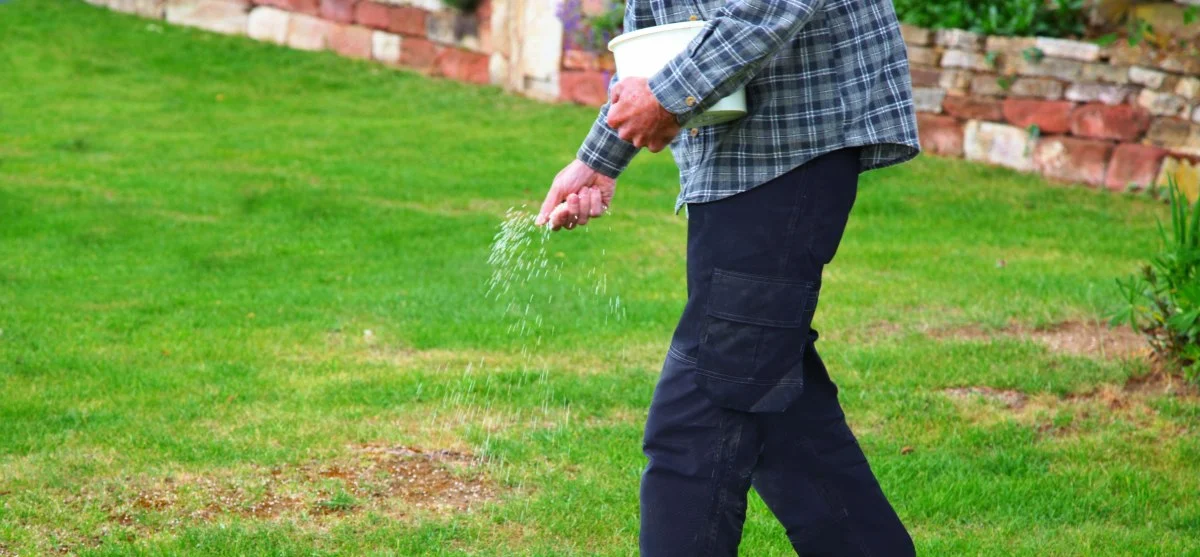
Every spring, Knoxville homeowners make the same mistake: they look at the calendar, see it's mid-March, and reach for the fertilizer bag. The lawn looks like it's waking up. The trees are budding. It feels like the right time.
It isn't — at least not yet. And fertilizing too early doesn't just waste product. It actively works against the lawn you're trying to build.
Why the Calendar Lies
The date on the calendar tells you nothing about what's happening underground. Your grass roots don't respond to March 15th — they respond to soil temperature. Until the soil at a 2-inch depth warms consistently to around 55°F for cool-season grasses (like the tall fescue common across Knoxville) or 65°F for warm-season grasses (Bermuda, Zoysia), the turf simply isn't metabolizing nutrients at a meaningful rate.
Apply nitrogen before that threshold and you're feeding weeds more than grass. Early nitrogen also pushes rapid top growth before the root system has caught up — producing lush blades that stress easily in late-spring dry spells and increasing disease vulnerability.
Key rule: The soil temperature at 2-inch depth, measured consistently for several days, is the trigger — not the air temperature, not the date, not the appearance of the grass.
What "Consistent" Actually Means in Knoxville
East Tennessee's spring is famously unreliable. Knoxville regularly sees 70°F days in February followed by freezes in April. A single warm stretch isn't enough — you need a sustained pattern of warmer nights, not just warm afternoons, because soil temperature lags behind air temperature and resists short-term swings.
As a practical guideline, our technicians target:
- Tall fescue (most common in Knoxville): First application when soil temps hold at 55°F+ for at least 5 consecutive days — typically late March to mid-April in the Knoxville area.
- Bermuda and Zoysia: Delay until soil temps reach 65°F and nighttime temps are consistently above 50°F — usually late April to early May.
- Mixed lawns: We prioritize the cool-season grass timing and use a lower-nitrogen starter blend to avoid pushing warm-season grass too hard before it's ready.
How We Track Soil Temperature
You don't need any special equipment. The easiest method is to use your local extension office data or a free soil temperature map for your zip code — most state university extension services publish live readings updated daily during the growing season. The University of Tennessee Extension is a solid resource for Knoxville-area readings.
If you want to measure directly, a basic probe thermometer pushed 2 inches into the soil at multiple spots across your yard (avoiding areas next to the house foundation, which warm up faster) gives you an accurate local reading.
Soil Temperature Guide for Knoxville Lawns
| Grass Type | Target Soil Temp | Typical Knoxville Window |
|---|---|---|
| Tall Fescue | 55°F+ (sustained) | Late March – Mid April |
| Kentucky Bluegrass | 55°F+ (sustained) | Early – Mid April |
| Bermuda | 65°F+ (sustained) | Late April – Early May |
| Zoysia | 65°F+ (sustained) | Late April – Early May |
| Centipede | 65–70°F (sustained) | Early – Mid May |
What Product to Use First
The first spring application isn't the time for a heavy nitrogen push. We recommend a balanced slow-release fertilizer — something with a moderate nitrogen ratio and added potassium to support root development coming out of dormancy. A high-nitrogen "greening" product applied in early spring produces the quick visual result homeowners want to see, but it creates a harder season ahead.
If you haven't done a soil test recently, the first spring application is also the right time to add one. Knoxville soils are often clay-heavy and tend to run slightly acidic — conditions that affect how efficiently your lawn can even absorb the fertilizer you're applying. A soil test tells you whether you need a lime application alongside your first feeding, which is something no generic bag of fertilizer can tell you.
New to Canvas? Every new customer receives a complimentary soil test before we build your treatment plan. This is how we ensure your fertilization program is built around your actual lawn chemistry — not a generic formula.
The Pre-Emergent Timing Connection
First spring fertilization and pre-emergent weed control are closely linked — and easy to get wrong independently. Pre-emergent herbicide (the product that stops crabgrass and goosegrass before they germinate) is effective at roughly the same soil temperature window as your first fescue fertilization: 50–55°F.
This creates a strategic question: apply pre-emergent first (to lock in weed protection), then fertilize? Or combine them in a single application?
For most Knoxville lawns, our technicians apply a pre-emergent first — slightly ahead of the fertilization window — then follow with the first fertilizer application within a week or two. The combined-product approach (fertilizer + pre-emergent in one bag) is convenient but less precise, since the two products have slightly different optimal windows and the formulations are compromised to allow combination.
Signs You Waited Too Long
If you miss the first-application window, you'll know it. Tall fescue that doesn't receive its early-spring nutrition tends to come out of winter looking thin and pale, then surge unevenly when warm weather arrives. You'll also see opportunistic weed pressure — crabgrass in particular will establish aggressively in bare or thin patches that a well-timed spring program would have prevented.
Late fertilization can still help, but it typically takes two applications through spring to recover what a single well-timed first application would have accomplished.
The Bottom Line for Knoxville Homeowners
Watch the soil temperature, not the calendar. For tall fescue (by far the most common grass in the Knoxville area), that means waiting until late March at the earliest in most years — and sometimes into mid-April following a cold spring. Patience here pays off through the entire season.
If you're not sure what grass type you have, or if your lawn has a mix, a quick consultation with our team will clear it up — and we can take the guesswork out of the timing entirely.
Want a Treatment Plan Built Around Your Lawn?
We'll start with a free soil test and build a fertilization and weed control program matched to your specific turf type and Knoxville soil conditions.
Get My Free Estimate